On the fate of the BSA

This week, a Broadcast Standards Authority special. Not the commentary piece we wanted to write, but here we are.
FACT Aotearoa is disappointed in the Government's decision to disestablish the BSA, and to devolve its duties to a hypothetical voluntary industry body.
For many years the BSA has asked governments lead by both Labour and National for a legislative update to clarify what jurisdiction the BSA has over content delivered over the Internet.
The BSA's decision to hear the complaint against The Platform needs to be seen in this light. Not as an authoritarian over-reach by would-be censors, but rather a regulator attempting to clarify its duties in the Internet age, in the face of a bipartisan dereliction of responsibility on the part of our elected leadership to do so for them.
It also needs to be noted that the BSA has not as yet ruled on whether Sean Plunkett calling tikanga "mumbo-jumbo" breaches broadcasting standards. It may be the case that the BSA finds this kind of language acceptable as a personally held opinion – a casual look at the BSA's recent rulings will show that the BSA frequently declines to rule against language that some find to be casually racist or disrespectful.
Of course, the disestablishment of the BSA is not about one incident or one self-described journalist. It is about the kind of media environment we want to live in.
By and large, New Zealanders have an expectation of fair dealing: of truth in advertising, in our food being safe to eat, our buildings being safe to live in, our workplaces being safe to work in. These standards do not arise out of nothing.
There is a saying: Workplace safety rules are written in blood. Every safety standard is written in response to an injury, accident or death, with the hopes of preventing a repeat of that tragedy. The same is true of food standards, truth in advertising laws, building standards: We can trust our food, advertising and buildings because behind each one there is a regulatory body standing ready to hold people who breach our trust accountable.
The BSA, like it or loathe it, was there to do the same for live broadcasting.
There are those who feel that the internet is somehow different from television and radio. That if someone styles themselves as a journalist, hosts a livestream with the appearance of a journalist, leans on their reputation and history in journalism for credibility, then so long as they are doing so over the internet then they should not actually have to abide by the standards Kiwis have come to expect journalists to hold.
That is not a position FACT holds. But rather than have an open and honest public debate as to whether online journalism should have standards or not, the Government has decided that such a debate is not necessary and not even worth having.
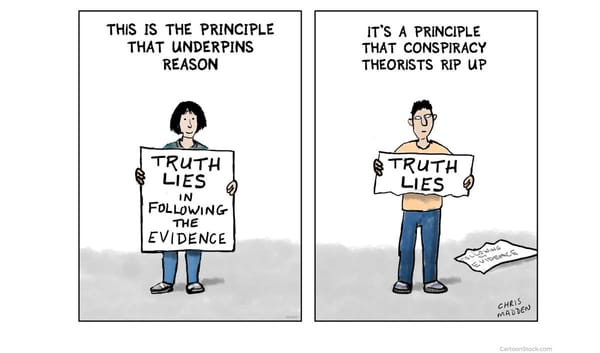
FACT stands against misinformation. The BSA is an imperfect institution challenged by changing technology, but to abolish that institution is to fail to answer the challenge. Nobody's interests are served by a media landscape where lies cannot be held to account. We call for all political parties to work towards fixing the Broadcasting Standards Authority, so that we can rebuild trust in the media we enjoy.
Our April newsletter collected comment and background on the BSA controversy.
Here's more recent commentary we noted on this development: