FACT Aotearoa April newsletter

Kia ora koutou and welcome to another FACT newsletter. It’s our first with a new platform (Ghost) so please to excuse any glitches…
In this edition
We round up recent articles that caught our eye on the conspiracy theory and misinformation beat. We think about the latest report from the Royal Commission of Inquiry into lessons learned from the COVID-19 pandemic response. And we have thoughts on the Broadcasting Standards Authority.
A hollow victory for supporters of the BSA?
The Broadcasting Standards Authority provides something really important in our public sphere. At its best, it gives us a considered evaluation of whether media coverage is fair. We think that’s really important. It means something to be able to point to a BSA ruling and say “this story was found to be unbalanced and misrepresented the situation.”
And we think it’s obvious that an outlet that looks like a broadcaster, presents like a broadcaster, talks like a broadcaster, quacks like a broadcaster… is a broadcaster.
It’s also hard not to suspect that the purely online nature of The Platform and Reality Check Radio is a deliberate strategy to avoid being subject to BSA rulings. Sean Plunket’s belief that he was not, and subsequent protests, would support that.
So we’re happy to see the BSA clear up ambiguity by saying yes, they have jurisdiction. (More on this in "In the news" below.)
Unfortunately, it seems that the relevant minister, Paul Goldsmith, doesn’t agree. He has suggested that the government is likely to scrap the BSA.
We think that’s a really bad idea. If people are genuinely worried about threats to free speech, their legislation could be amended to remove their ability fine or shut down. But the ability to rule on fairness and balance is too valuable to do away with. And we have to ask: who is served by this? Get in touch with your thoughts and we’ll run a selection in our next newsletter.
Royal Commission of Inquiry
There is a grim satisfaction in saying “We told you so.” But it’s still satisfaction, so let’s just quote ourselves from 2023:
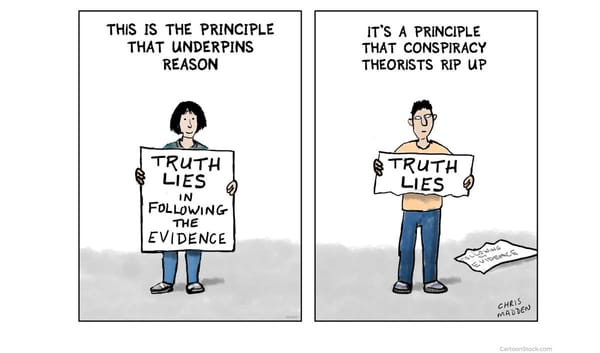
The key players in the conspiracy theorist movement portray everyone who disagrees with them as being either brainwashed or corrupt. They encourage their followers to distrust experts and other credible sources of information and have put a lot of effort into constructing alternative communications and media channels – essentially echo chambers – where their misinformation and disinformation will not be properly scrutinised. Contrary to their rhetoric, not much critical thinking goes on and they can best be described as “a safe space for people with contrary views”. Reiner Fuellmich’s ‘Corona Investigative Committee’ was such a space.
A “fully independent inquiry” wouldn’t be like Fuellmich’s crank convention. It would test arguments and evidence, draw on experts with relevant skills and knowledge and come to reality based conclusions. Inevitably this would contradict what anti-vaxxers and conspiracy theorists believe to be true. This means it would never give them the vindication or “justice” they desperately want.
In the news
Media law expert Steven Price writes about the BSA’s ruling that it has jurisdiction over purely online outlets like The Platform and Reality Check Radio. He’s happy about, it seems… Attempt to de-Platform the BSA fails
… but Winston Peters is not. Can’t think why. ‘‘Bordering on fascist’: Winston Peters calls for BSA to be abolished after landmark ruling.
Worryingly, this might be connected to news this week that the government may scrap the BSA. Broadcasting Standards Authority will ‘probably’ be scrapped, Goldsmith says.
We keep an eye on NZ resident Canadian billionaire Jim Grenon ever since he backed The Centrist, a decidedly non-centrist website which often ventured into conspiracy theory territory. The defamation claim he backed has failed. We are often told that the only way to fight “bad speech” is with “good speech”. If so, it’s vitally important that critics of dubious opinions aren’t shut down by defamation. Julian Batchelor ‘wholly unsuccessful’ in defamation claim against TVNZ.
The Royal Commission of Inquiry into lessons learned from COVID-19 response finally reported back. While conspiracy theory groups like Voices For Freedom weren’t happy, people who actually know about this stuff at least weren’t unhappy: Covid inquiry phase two – Expert Reaction.
This Spinoff opinion piece captures the sad truth underlying the push for the second phase and the inability of some to accept the results. The real lesson of the second Covid-19 inquiry? We live in a post-truth world.
Our take is that if a group of serious sensible people consider your statements at length, but in the end don’t agree, you have been heard, and you haven’t been silenced. Your problem is simply that you don’t like the result.
Like many people, we’ve been worried about AI as a tool for creating and spreading misinformation. In some cases, this is going to be deliberate, and the effect on our politics among other things is going to be bad: AI is already creeping into election campaigns. NZ’s rules aren’t ready.
But in other cases, it’s not so much deliberate intent as a consequence of carelessness. It turns out that AI does not have the same ability to judge credibility as human editorial control… but then do humans have the ability to be skeptical about AI output? Analysis Finds That Google’s AI Overviews Are Providing Misinformation at a Scale Possibly Unprecedented in the History of Human Civilization.
Help FACT
We accept donations, which we use for hosting costs, software, admin expenses, and professional services.
But we also really could use your time! If you are interested in helping FACT drop us a line. We always need help with research and producing content among other things.
That’s it for now. If there are things you want to see in upcoming newsletters, or news you want to share with us, let us know.